
AI Coding Agents Didn’t Make Software Engineering Obsolete—They Changed Where the Value Lies

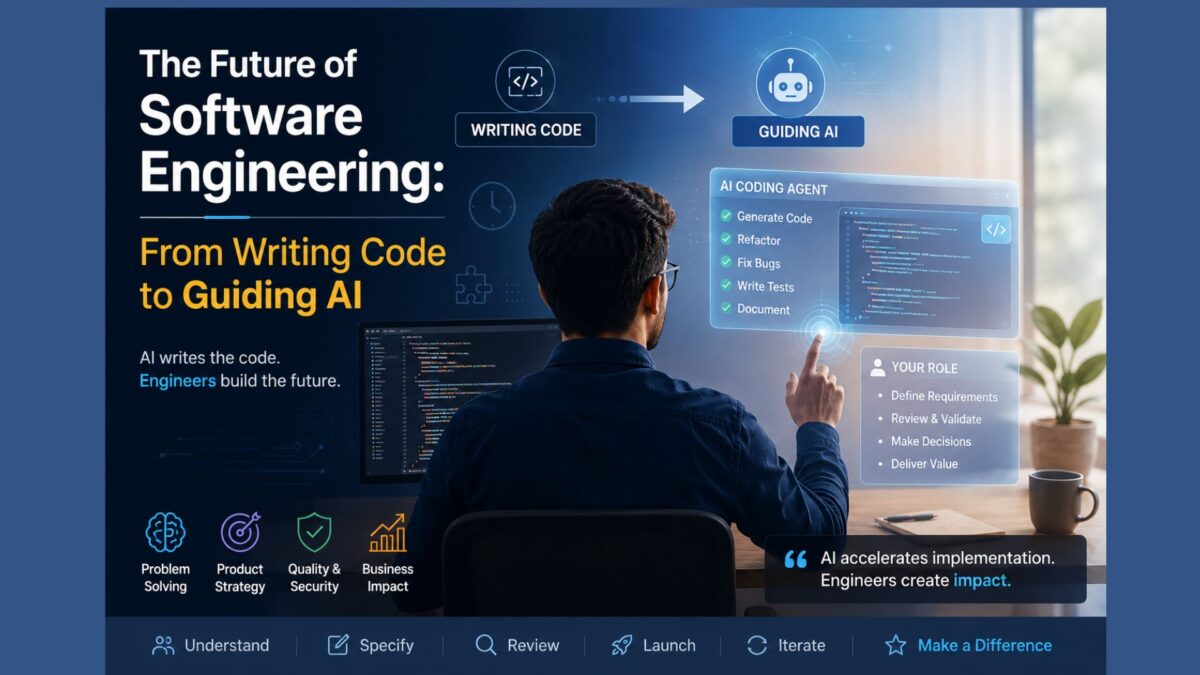
For many developers, the emergence of AI coding agents has prompted an uncomfortable question: Was all the time spent learning software development worth it if AI can now generate working code in minutes?
A recent reflection on the development of the Flipnzee Auctions plugin offers an interesting perspective.
The project began as a learning exercise. Rather than rushing to release a product, its development progressed step by step, covering WordPress plugin architecture, object-oriented PHP, database design, AJAX, scheduled tasks, payment workflows, Git, debugging, and software organization. Every feature became an opportunity to understand not just what to build, but why it should be built that way.
Looking back, there is no denying that modern AI coding agents can now perform many of these implementation tasks remarkably quickly. Refactoring classes, generating CRUD interfaces, organizing project structures, fixing common bugs, writing documentation, and even producing test cases are increasingly becoming tasks that can be completed in minutes rather than days.
At first glance, this might suggest that months of development effort were unnecessary.
The reality is more nuanced.
The greatest value of the project was never the number of lines of PHP that were written. It was the understanding gained throughout the process.
By building the plugin manually, the developer learned how WordPress hooks interact, how database migrations work, why security checks matter, how to organize maintainable code, how to debug complex issues, and how seemingly small architectural decisions affect future development.
These lessons cannot simply be downloaded from an AI.
Ironically, this experience makes AI significantly more valuable rather than less. Someone who understands software engineering can evaluate AI-generated code, recognize hidden bugs, identify security concerns, and determine whether a suggested implementation truly fits the product.
Without that understanding, generated code often becomes little more than a black box.
There is, however, an important lesson for startups.
While the educational value of building software from scratch is enormous, there is also a point of diminishing returns. Projects can become trapped in endless cycles of refactoring, redesigning, and documenting instead of reaching users.
Many founders discover that they spend more time perfecting architecture than validating whether customers actually want the product.
In hindsight, a more balanced approach may have been to release an early version, gather feedback, and allow AI to accelerate subsequent iterations.
This highlights the real shift brought about by modern coding agents.
The competitive advantage is no longer typing code faster than everyone else.
The competitive advantage lies in identifying worthwhile problems, designing practical solutions, specifying clear requirements, reviewing AI-generated implementations, and continuously improving the product based on real-world feedback.
For developers who have invested years in learning programming, this should be encouraging rather than discouraging.
Their knowledge has not lost its value.
Instead, the nature of their work has evolved.
As AI increasingly handles implementation, software engineers move higher up the value chain—focusing on product strategy, architecture, user experience, quality assurance, and business decisions.
The future belongs not to those who write every line of code manually, nor to those who rely entirely on AI, but to those who can combine engineering judgment with AI-assisted development.
In many ways, learning software engineering has become more valuable than ever—not because developers must write every function themselves, but because they now possess the expertise to guide AI toward building better software.